DOT LAKE, Alaska — Dot Lake Village has marked a year of significant progress in public safety, community wellness, and cultural revitalization as the Tribe continues expanding services for residents and the broader Interior Alaska region.

This summer, Dot Lake Village welcomed youth and families to its 2026 Culture Camp, bringing together Elders, community leaders, and Tribal staff to share traditional knowledge and strengthen cultural connections. Camp activities included outdoor education, cultural teachings, storytelling, and opportunities for youth to engage with positive role models from throughout the community.

Among those participating was Tribal Police Officer Doug Paradise, who joined youth and community members during camp activities as part of Dot Lake’s Tribal Community-Oriented Policing efforts. Officer Paradise’s participation reflects the Tribe’s commitment to fostering positive relationships between law enforcement and the community it serves.

(Dot Lake Police Office Doug Paradise participating in traditional cultural dance at Dot Lake Village’s Annual Culture Camp)

“Community policing means being present, building trust, and working alongside our residents,” said Tracy Charles-Smith, President of Dot Lake Village. “Our officers are not only here to respond when needed, they are part of our community and invested in the well-being of our people.”

Dot Lake Village also reached a historic milestone on June 1, 2026, with the official opening of its Tribal Law Enforcement Office. The establishment of the office represents years of planning and investment in Tribal sovereignty and public safety and ensures that residents have access to dedicated law enforcement services closer to home.

In addition to public safety initiatives, the Tribe continues to expand housing opportunities for residents. Planning and development efforts are underway for four additional apartment units, which will increase access to safe and affordable housing in the community. The new four-plex development is expected to support families and individuals seeking stable housing while helping address longstanding shortages in rural Alaska.

The Village has also continued strengthening its Sexual Assault Response Team (SART) program. Earlier this year, Dot Lake conducted a comprehensive SART mock call-out exercise designed to simulate a real-world response to sexual assault. The training followed a case from the initial call-out and triage process through the completion of a forensic examination, evidence collection, victim advocacy services, safety planning, and follow-up care.

The exercise included victim models, Sexual Assault Nurse Examiners (SANEs), victim advocates, and law enforcement personnel working together to ensure a coordinated and trauma-informed response. Team members also received additional training on trauma-informed care and best practices for supporting survivors throughout the process.

“These trainings are critical to ensuring that every survivor who comes to us is met with compassion, professionalism, and a coordinated response,” said Dr. Sallette Thompson, Behavioral Health Director and SART Director for Dot Lake Village. “Sexual assault survivors deserve access to high-quality care regardless of where they live. By practicing every step of the response process, from the initial call to long-term follow-up, we are ensuring that our team is prepared to provide services that are survivor-centered, culturally responsive, and grounded in trauma-informed care.”

The importance of this preparation became evident in May when Dot Lake Village provided comprehensive services to its first SART client. The multidisciplinary team successfully delivered coordinated victim services, including forensic and medical support, relocation assistance, victim advocacy, safety planning, and ongoing follow-up care.

Advocates have continued working alongside the survivor by assisting with court case tracking and helping navigate the legal process, ensuring continued support beyond the initial response.

“Providing our first full SART response was a significant milestone for our community,” said Dr. Thompson. “It demonstrated that rural and Tribal communities can build systems of care that provide survivors with the same level of support and professionalism found anywhere in the country.”

As Dot Lake Village continues to invest in public safety, behavioral health, housing, and cultural programming, Tribal leadership remains committed to building a resilient and thriving community for future generations.

From opening its Tribal Police Department to expanding housing, strengthening victim services, and investing in youth through Culture Camp, Dot Lake Village continues to demonstrate what is possible when Tribal communities lead the development of programs designed to meet the unique needs of their people.

DOT LAKE VILLAGE, ALASKA  – June 26, 2026

The Native Village of Dot Lake is pleased to announce that it has officially begun the process of entering into a Self-Governance Compact with the Bureau of Indian Affairs, marking a significant milestone in the Tribe’s continued efforts to strengthen tribal sovereignty, expand local control of programs and services, and increase self-determination for its citizens.

Through the Tribal Self-Governance Program, federally recognized tribes have the opportunity to assume greater responsibility and authority over federal programs, services, functions, and activities that serve their communities. By pursuing compacting, the Native Village of Dot Lake joins a growing number of Alaska Native tribes exercising greater control over the delivery of services to their people.

“This is an important step forward for our Tribe,” said Tracy Charles-Smith, President of the Native Village of Dot Lake. “Compacting allows us to make decisions locally, respond more effectively to the needs of our citizens, and continue building a stronger future for our community while exercising our inherent sovereignty.”

The decision to pursue self-governance reflects years of organizational growth, financial stability, and sound administrative practices. The Tribe has demonstrated responsible stewardship of federal funds through successful audits, strong financial management systems, and the expansion of tribal programs and services.

Over the past several years, the Native Village of Dot Lake has significantly expanded its programs, including behavioral health services, victim services, tribal court operations, housing assistance, language preservation, youth programming, public safety initiatives, and the establishment of the Dot Lake Village Police Department.

“Entering into the self-governance process demonstrates the strength and capacity our Tribe has built over many years,” said Tracy Charles-Smith. “This effort represents an investment in our future generations by ensuring that decisions affecting our people are made by tribal leadership that understands our community, our culture, and our priorities.”

The self-governance compacting process includes planning activities, negotiations with the Bureau of Indian Affairs, and the development of annual funding agreements that identify the programs and services to be administered by the Tribe.

The Native Village of Dot Lake views this effort as an important step toward strengthening local governance, improving service delivery, increasing accountability, and advancing tribal self-determination for the benefit of current and future generations.

The Tribe looks forward to working collaboratively with the Bureau of Indian Affairs throughout the compacting process and continuing to advance tribal self-governance on behalf of its citizens.

About the Native Village of Dot Lake

The Native Village of Dot Lake is a federally recognized Alaska Native Tribe located in Interior Alaska along the Alaska Highway. The Tribe provides governmental services and programs that support the health, safety, culture, and well-being of its citizens and surrounding communities. Through its programs and partnerships, the Tribe works to strengthen tribal sovereignty, preserve Upper Tanana culture and language, and improve the quality of life for present and future generations.

Media Contact

Kelli Reep
Fly Write Communications
Email: kelli@flywritecommunications.com

FOR IMMEDIATE RELEASE

Dot Lake Village Police Department Expands Public Safety Services with New Chief and Police Officer

DOT LAKE, ALASKA — June 2026 — The Native Village of Dot Lake is pleased to announce the hiring of Darrell Hildebrand as Chief of Police and the official transition of Doug Paradise as Tribal Police Officer with the Dot Lake Village Police Department.

Chief Darrell Hildebrand
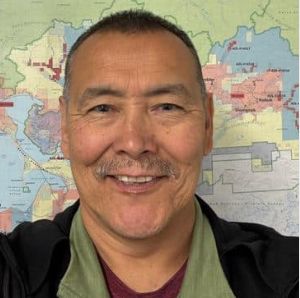
Officer Doug Paradise

Officer Paradise has been serving the Dot Lake community since July 2025 through a cooperative agreement with the Chickaloon Tribal Police Department. Effective June 1, 2026, Officer Paradise officially became an employee of the Native Village of Dot Lake, providing continuity of law enforcement services and strengthening the Tribe’s growing public safety infrastructure. During his time serving Dot Lake, Officer Paradise has worked closely with Tribal leadership, residents, and partner agencies to improve community safety and provide a consistent law enforcement presence in the Village.

Chief Hildebrand brings more than two decades of law enforcement experience to the Department. A retired Alaska State Trooper with over twenty years of service, he has extensive experience in criminal investigations, search and rescue operations, community policing, rural public safety, and collaboration with Tribal governments throughout Alaska. Throughout his career, he has worked closely with Alaska Native communities, schools, VPSOs, and local governments to address public safety concerns and develop community-based solutions.

“The addition of Chief Hildebrand and the transition of Officer Paradise to a permanent Dot Lake Village position represent major milestones for our community,” said Tracy Charles-Smith, President of the Dot Lake Village Council. “For many years, our residents have faced significant delays in receiving law enforcement services due to our remote location. Through the establishment of our own Tribal Police Department, we are creating a safer community while ensuring law enforcement services are provided by professionals who understand the needs and values of rural Alaska communities.”

The creation and expansion of the Dot Lake Village Police Department were made possible through funding provided by the U.S. Department of Justice, Office on Violence Against Women (OVW), Special Tribal Criminal Jurisdiction (STCJ) Program. The Department serves as a cornerstone of Dot Lake Village’s broader public safety strategy, which includes Tribal Court operations, victim advocacy services, behavioral health programming, domestic violence intervention services, Sexual Assault Response Team (SART) services, and community-based prevention initiatives.

The Department will continue working closely with Tribal, local, state, and federal partners to enhance public safety, support victims of crime, and strengthen trust between law enforcement and the community.

Grant Acknowledgment and Disclaimer

This project was supported by Grant No. 2023 OVW 15JOVW-23-GG-04491-TRIB awarded by the Office on Violence Against Women, U.S. Department of Justice. The funding provided through this award supported the establishment and development of the Dot Lake Village Police Department.

The opinions, findings, conclusions, and recommendations expressed in this publication are those of the author(s) and do not necessarily reflect the views of the U.S. Department of Justice, Office on Violence Against Women.

How Special Tribal Criminal Jurisdiction Helped Transform Dot Lake Village

For years, the residents of Dot Lake Village faced escalating crime, drug activity, vandalism, and violence with little immediate law enforcement support available to the community. Located along the Alaska Highway in the Upper Tanana region, the small rural Alaska Native village often waited extended periods for emergency response from outside agencies located an hour away.

Today, community leaders say the situation has changed dramatically.

Through funding received under the Department of Justice Special Tribal Criminal Jurisdiction (STCJ) Program in 2023, Dot Lake Village has been able to strengthen tribal governance, expand public safety infrastructure, and establish a tribal law enforcement presence within the village for the first time in modern history.

According to Tribal President Tracy Charles-Smith, the STCJ grant provided the resources necessary to modernize the Tribe’s justice system and create long-term community safety initiatives.

“We were able to update our tribal codes, strengthen our Tribal Court system, create a law enforcement agency, hire a police officer, and secure support from prosecutors, public defenders, and tribal court judges,” Charles-Smith explained during a recent interview.

For community members, the most immediate impact has been a renewed sense of safety.

“Everyone feels safer,” Charles-Smith said. “The council doesn’t have to do the policing anymore, which caused a tremendous amount of stress and danger for leadership and employees. There’s been a reduction in vandalism and criminal activity.”

Before the establishment of a tribal police presence, Dot Lake Village experienced years of persistent drug activity and property crime. Tribal leadership described a period when village infrastructure was repeatedly vandalized, tribal property was damaged, and residents lived under constant fear and intimidation.

“There were nonstop problems,” Charles-Smith said. “Traffic in and out of drug houses at all hours, thefts, vandalism, aggressive behavior, and threats against council members and employees. People didn’t feel safe.”

According to Charles-Smith, the Tribe began addressing these issues years before receiving STCJ funding, often with little outside assistance. Tribal leadership initiated civil legal action against major drug operators, enforced tribal land and lease requirements, and rebuilt the Tribe’s financial and administrative systems following significant governance and financial challenges.

“We had to rebuild everything from the ground up,” she said. “But we kept going because we wanted Dot Lake to be safe again.”

The STCJ grant helped expand and formalize those efforts by allowing the Tribe to establish its own law enforcement capacity.

Village resident Chance Shank described the change as immediate and substantial.

“The difference is huge,” Shank said. “Before, if something happened, we were relying on a response from Tok, which could take an hour or more. Now, with a tribal police officer stationed in the village, response times can be just minutes.”
Shank noted that simply having a visible law enforcement presence has helped deter criminal behavior.

“People know there’s accountability now where there wasn’t before,” he explained. “Issues like reckless driving, vandalism, trespassing, and damage to tribal property can now be addressed immediately.”

Tribal leadership also emphasized that building a culturally grounded police department has been central to Dot Lake Village’s approach to public safety.

“We now have the ability to hold our staff to the highest standards,” Charles-Smith said. “Racism is not tolerated, and our tribal members do not have to worry about being shot by officers when there is a situation.”

She added that Dot Lake Village is intentionally building a public safety system rooted in traditional Native values and community relationships.

“Our staff is learning to carry the same cultural values as our ancestors,” she said. “We’re teaching our youth about the importance of our traditional ways.”

The tribal police presence has also strengthened relationships within the community, particularly with youth.

Tribal Police Officer Douglas Paradise has participated in cultural activities and youth programming, including Dot Lake Village’s Winter Culture Camp and trips to the Tribe’s fish camp at Sam Lake alongside students and elders.

“He’s built relationships with the community,” Shank said. “The kids had a great experience with him, and that matters.”
In addition to strengthening public safety, Dot Lake Village has utilized Department of Justice funding to build a broad network of culturally responsive victim and behavioral health services through its tribal programs, including TeeJuh Behavioral Health.

What began as efforts to address violence and substance abuse within Dot Lake Village has expanded into a regional support system serving individuals and families in more than 40 communities across Alaska.

Through these programs, Dot Lake Village now provides services for victims of crime, counseling and behavioral health support, Batterer’s Intervention Programs, alcohol recovery support groups, Missing and Murdered Indigenous People (MMIP) family support groups, parenting classes, domestic violence education groups for both men and women, and survivor support services for victims of sexual assault and domestic violence.

The Tribe has also established one of Alaska’s first Tribal-led Sexual Assault Response Team (SART) programs, helping survivors access advocacy, forensic support, safety planning, and culturally informed care closer to home.

Leaders say these programs are rooted in healing, accountability, and restoring traditional community values.

“For us, this work is bigger than law enforcement,” Charles-Smith said. “It’s about healing our people, supporting victims, rebuilding families, and making sure future generations grow up understanding who they are and where they come from.”
Today, Dot Lake Village leaders say the community is experiencing a level of stability and safety that many residents had not felt in years.

“We can finally sleep at night knowing someone is here,” Charles-Smith said. “People know they don’t have to put themselves in danger anymore to protect the community.”

While challenges remain, tribal leadership believes the STCJ program has fundamentally changed the trajectory of the village by empowering the Tribe to exercise greater sovereignty over public safety, justice services, and community wellness initiatives.

The Tribe continues to utilize STCJ funding to strengthen Tribal Court operations, expand law enforcement capacity, improve victim services, and build long-term public safety infrastructure designed specifically for the needs of rural Alaska Native communities.

For Dot Lake Village, leaders say the work is ultimately about restoring safety, stability, healing, and hope for future generations.

“We did this because we wanted our community to be safe again,” Charles-Smith said. “And now we’re seeing what’s possible when Tribes are given the tools and authority to protect and care for their own people.”

The Dot Lake Village Council will be conducting their Annual Tribal Membership Meeting and Village Council Election at 11 a.m. July 7, 2026, at the Dot Lake Community Hall.

Tribal members are encouraged to cast their ballots. Individuals must be present at the Community Hall to vote. One seat is up for election, Seat E, which has a three-year term.

Seat E: New three-year term – 2026-2029
Current Seat E holder: Chance Shank – 2023-2026

The Council Members below have the following terms:

  • Seat A: Cary Freeman – 2024-2027
  • Seat B: Jordyn James – 2024-2027
  • Seat C: Tracy Charles-Smith – 2025-2028
  • Seat D: Karin Rajala – 2025-2028

Immediately following the election, the new Council will conduct a Village Council Meeting to elect new officers and to attend to any other business that may come before the Council.

Please update family information at this time. We need current information in order to keep tribal members informed and to keep our tribal rolls up to date.

Candidate Election Application Form (opens in new window) – Please fill out this form to submit your candidacy for the upcoming election.

Official Election and Meeting Notice
Official Notice of Election
Election Code

The laundromat will be open in the below listed operating hours, until further notice. Additionally, the laundromat will be closed on all Dot Lake Village Council recognized holidays.

If you require assistance, please contact the Dot Lake Village Council:
Phone (907) 882-2695
Email: council@dotlakevillage.org

New Laundromat Hours

Monday – Friday: 9 a.m. – 3 p.m.
Saturday-Sunday: Closed

January 1 – New Year’s Day

January 2 – Discretionary

January 19 – MLK Day

February 16 – Presidents Day

March 13 – Traditional Chief’s Day

May 25 – Memorial Day

June 19 – Juneteenth

July 3 – Independence Day

September 7 – Labor Day

October 12 – Indigenous Peoples Day

November 11 – Veteran’s Day

November 26 – Thanksgiving

November 27 – Thanksgiving

December 24 – Christmas Eve

December 25 – Christmas Day

2026 Calendar (PDF)

The Dot Lake Village Council will begin holding regular meetings of the Tribal Council on the second Wednesday of each month from 5:00 PM to 6:00 PM. The meetings will be held virtually over Zoom.

Pursuant to Article 7, Section 2 of the Dot Lake Constitution (adopted by Tribal Voters on July 9th, 2016),

“Regular meetings of the Council shall be held monthly, on a date, time, and place to be determined by majority vote of the Council. Notice shall be posted at a minimum of 7 days prior in at least 2 public places in Dot Lake, and may be posted on the Tribe’s website, on the Tribe’s social media, and emailed or mailed to the tribal voters. Meetings shall be generally held under Roberts Rules of Order. Minutes shall be taken at all regular meetings of the Council and shall be made available for tribal members to see. Major business of the Council shall be done by tribal resolution. All regular meetings shall be open to the general tribal membership except when the Council is in executive session.”

This notice will include the link to join the monthly Tribal Council meeting, and it will be posted on the Tribe’s website, social media, and emailed to Tribal voters. If you have any questions, please reach out to the email listed at the bottom of this notice.

Zoom Link:
https://us02web.zoom.us/j/82017180549?pwd=noqAP4x1nk6labsPsnGIXlkhgGlnan.1

Meeting ID: 820 1718 0549

Passcode: 1361

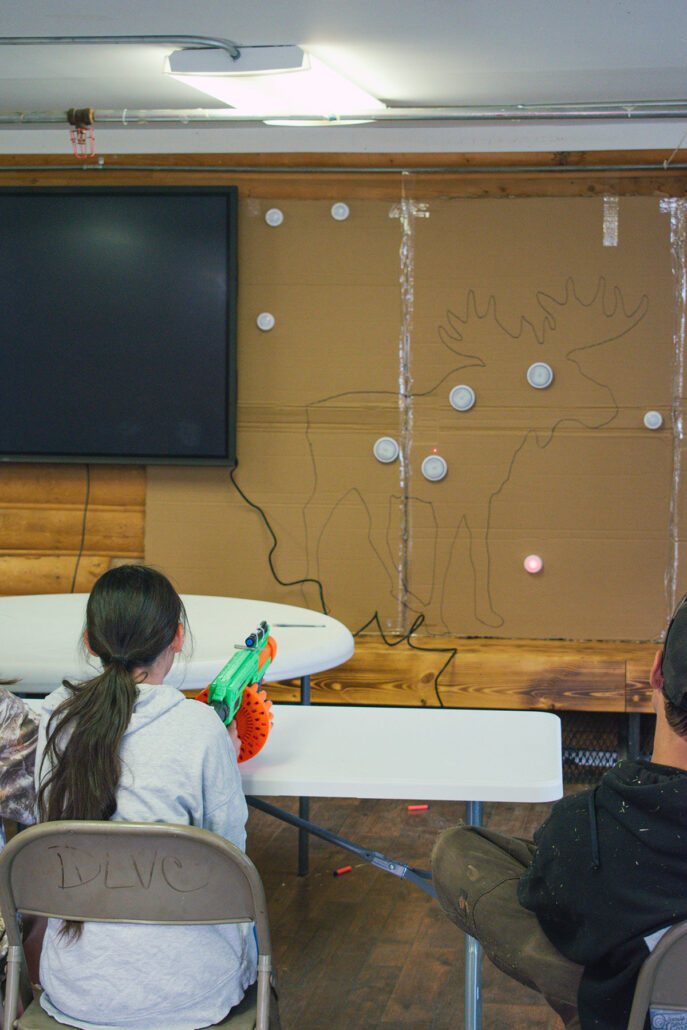
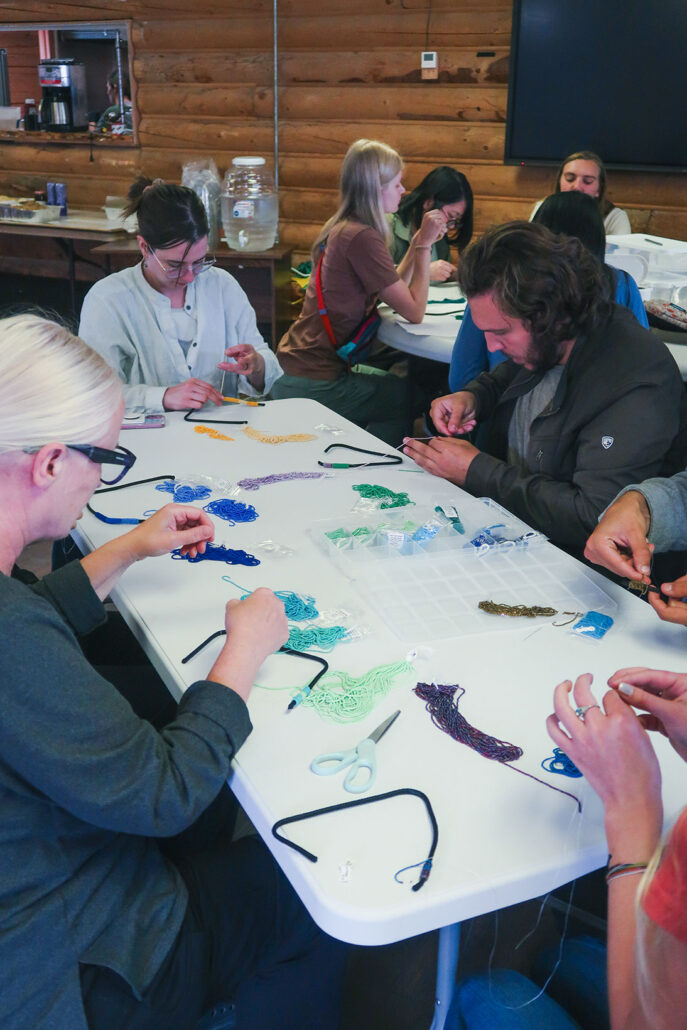
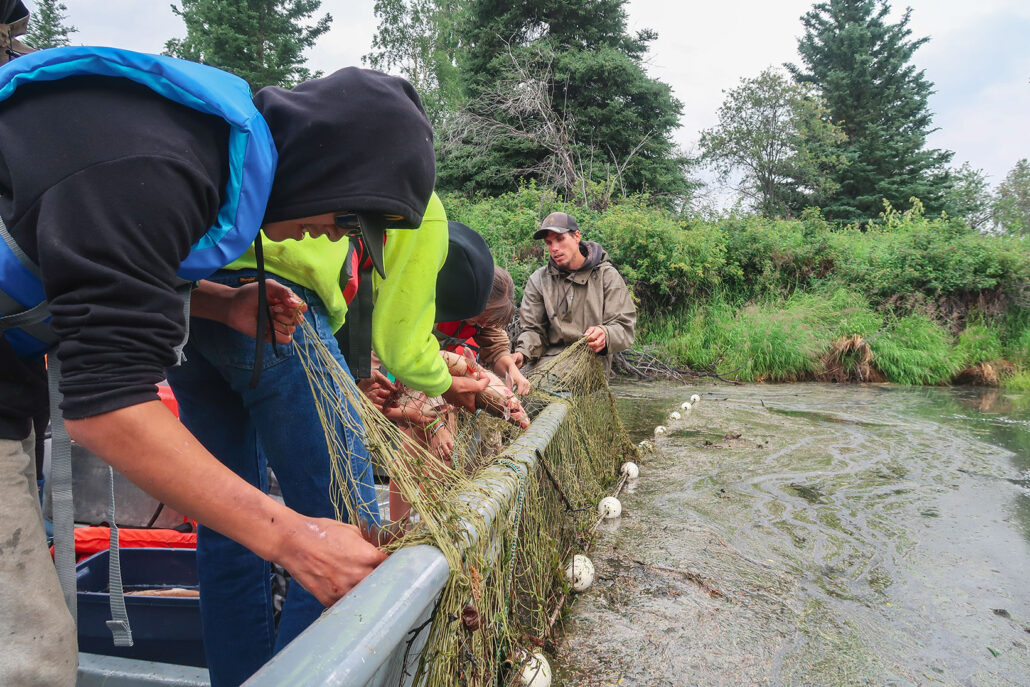
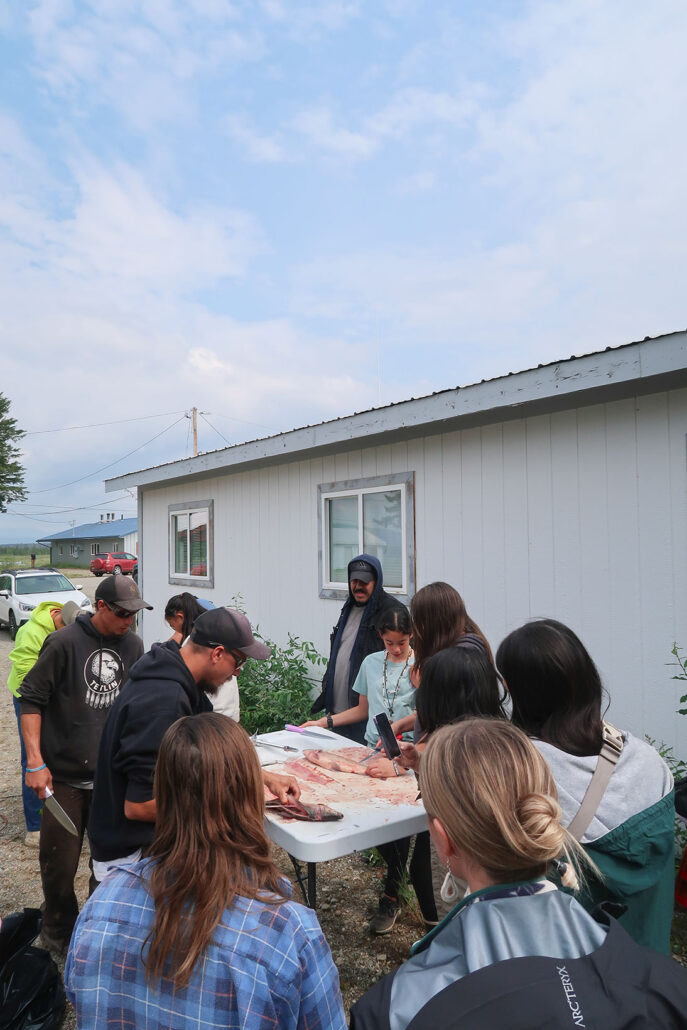
The 2025 Dot Lake Village Culture Camp brought together youth, elders, and instructors for three days of immersive, hands-on learning. Rooted in both tradition and modern knowledge, each day offered a balance of cultural teachings, subsistence skills, and educational presentations. The camp is designed to prepare the next generation to thrive while honoring their heritage.

Youth learned the fundamentals of ethical and legal hunting through detailed moose lessons, gaining an understanding of:

  • Habitat.
  • Proper shot placement.
  • Alaska’s game management practices.

Campers also worked alongside instructors on traditional crafts like beading lanyards, keychains, and earrings, honing patience and attention to detail.

Trips to the historic Sam Lake fish camp provided real-world experience in setting and pulling fish nets, canoeing, boating, and processing native whitefish. Instructors also shared skills essential for a self-reliant lifestyle in Alaska’s Interior region:

  • How to preserve foods.
  • Identify edible plants.
  • Prepare traditional recipes.

Cultural preservation was woven into every activity. Elders and traditional instructors led singing and drumming lessons, teaching songs from Interior villages and encouraging participation in dances. Guest speakers introduced new opportunities in fields like anthropology and environmental science, connecting cultural heritage with academic and career paths.

The Tribe’s behavioral health team also provided education on the impacts of opioids and available community resources, underscoring the importance of wellness alongside cultural knowledge.

More than just a camp, this gathering served as a bridge between generations. It celebrated the land, strengthened community ties, and instilled pride in cultural identity. Culture Camp helped ensure our traditions, values, and skills continue to be carried forward by the youth of Dot Lake.

burn barrel

Burn Permit Poster (PDF)